
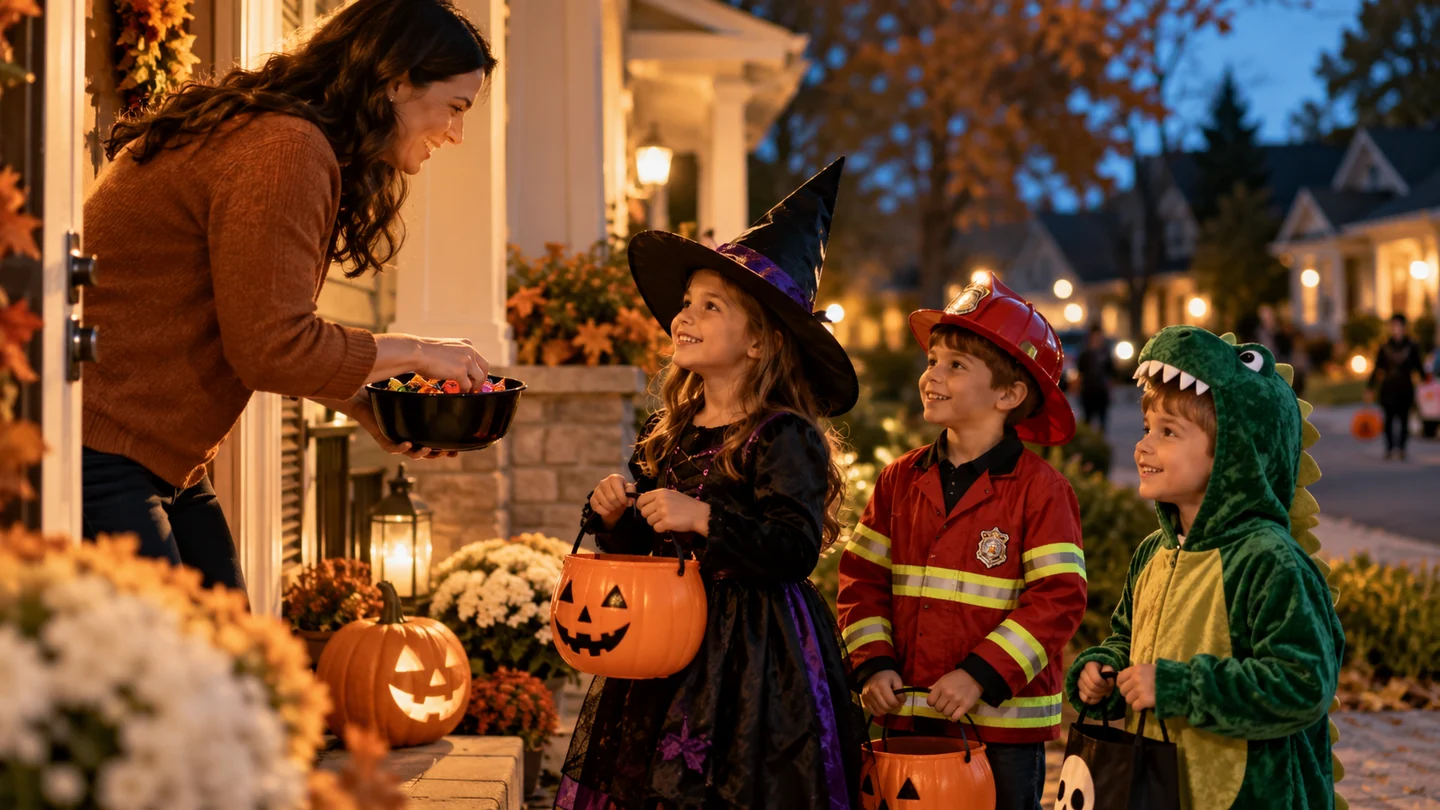
Should Christians celebrate Halloween? It is a question that comes up almost every October, especially in families where children want to dress up, collect sweets and join their friends.
Some Christians see Halloween as harmless fun. Others avoid it because of its associations with witchcraft, spirits and death. There are also Christians who participate in certain activities while choosing to avoid others.
The Bible does not directly address Halloween. It does, however, teach Christians to avoid occult practices, exercise discernment, honour God in their choices and respect matters of conscience.
That distinction matters. Taking a child to collect sweets is not the same activity as participating in a ritual intended to communicate with spirits. Yet both could take place on October 31.
To think carefully about the subject, we need to look beyond the date itself and consider the history, the actual activity and the biblical principles Christians bring to the decision.
What Does Celebrating Halloween Actually Mean?
Imagine three families living on the same street.
One family dresses their children as firefighters and cartoon characters. They visit a few neighbours, collect sweets and return home.
Another family attends a party filled with graphic horror, occult themes and activities they find spiritually troubling.
A third family stays home, invites a few friends over and spends the evening playing games.
All three families are responding to Halloween, but they are not doing the same thing.
This is one reason Christians can talk past one another. The word Halloween may refer to a neighbourhood event, horror entertainment, occult practices, school costumes, a church gathering or simply October 31.
A responsible Christian answer has to examine the activity rather than treating everything associated with the day as morally identical.
Where Did Halloween Come From?
Halloween has a long and complicated history. It did not begin as the modern combination of costumes, chocolate, pumpkins and parties that many people recognise today.
Its development includes Celtic seasonal traditions, Christian observances and customs that changed over several centuries.
The Connection With Samhain
Samhain was a seasonal festival in parts of the ancient Celtic world, particularly Ireland. It marked the end of the harvest period and the beginning of winter.
Later folklore associated the season with supernatural beings and the boundary between the ordinary and spiritual worlds. Some customs involving disguise and seasonal festivities have been connected with these traditions.
At the same time, historical claims about Halloween are often stated too confidently. We do not have evidence showing that every modern costume, pumpkin or neighbourhood custom is a direct continuation of an ancient pagan ritual.
History is usually more complicated than a single sentence shared on social media.
All Hallows’ Eve and All Saints’ Day
The name Halloween developed from All Hallows’ Eve, the evening before All Saints’ Day. In older English, a hallow is a holy person or saint.
All Saints’ Day is a Christian celebration honouring the saints and the hope of eternal life. The fact that October 31 sits immediately before that feast became part of the day’s later identity.
This does not mean every modern Halloween custom came from Christianity. It does mean that the history cannot accurately be described as though October 31 has one simple origin.
How Halloween Became a Modern Cultural Celebration
Irish and Scottish immigrants brought seasonal customs to North America. Over time, visiting homes, costumes, games and community activities developed into forms more familiar today.
By the twentieth century, Halloween in many places had become increasingly commercial and child-centred, with neighbourhood trick-or-treating, parties, decorations and entertainment.
Modern Halloween therefore contains several layers: religious history, folklore, local custom and commercial culture.
What Does the Bible Say About Halloween?
Halloween is not mentioned by name in Scripture. There is no verse that says, “Celebrate October 31,” or “Do not celebrate October 31.”
Christians therefore have to apply broader biblical principles to particular activities.
The Bible Warns Against Occult Practices
Deuteronomy 18:10–12 warns Israel against divination, sorcery, spells and attempts to consult the dead.
The New Testament also treats idolatry and participation in worship opposed to God seriously. In 1 Corinthians 10, Paul warns Christians against participating in religious practices incompatible with their allegiance to Christ.
These passages matter. Christians should not trivialise practices that deliberately seek spiritual power, hidden knowledge or communication with spirits.
But they also need to be applied accurately.
A séance is not the same activity as a child wearing a superhero costume. A person deliberately practising divination is not doing the same thing as a neighbour handing out sweets.
Christians may still decide that a particular costume, film or event is inappropriate. The reason should be based on what the activity actually involves, not on treating every use of fictional supernatural imagery as an occult ritual.
Christians Are Called to Think About What Is Good
Philippians 4:8 encourages believers to direct their thoughts towards what is true, honourable, just and pure.
That principle can shape choices about entertainment. One family may be comfortable with playful costumes but choose to avoid graphic horror. Another may avoid the celebration altogether because the atmosphere troubles their conscience.
Ephesians 5 also calls Christians to live as children of light and reject works of darkness. In context, Paul speaks broadly about sexual immorality, greed, foolish speech and faithful living. The passage should not be turned into a verse written specifically about Halloween decorations.
Not Everything Permitted Is Helpful
First Corinthians 10:23 reminds Christians that something may be lawful without necessarily being beneficial.
That is a useful principle for optional cultural activities. The question is not always, “Can I technically do this?” It can also be, “Is this wise for me, my child or my circumstances?”
Why Some Christians Choose Not to Celebrate Halloween
Some Christians avoid Halloween because they are uncomfortable with its historical associations, frightening imagery or the way some celebrations treat evil and death as entertainment.
Parents may decide that particular content is not appropriate for their children. Someone with a personal history involving occult practices may find the celebration spiritually or emotionally unhelpful.
Others simply do not want to participate.
There is no need to mock that choice. Halloween is optional. A family can abstain without proving that every person who participates is committing a serious sin.
Why Other Christians Participate
Other Christians distinguish between the historical background of Halloween and the meaning of a particular activity today.
They may allow children to dress as ordinary fictional characters, visit neighbours and receive sweets while avoiding themes or practices they find troubling.
Some Catholic families emphasise the relationship between All Hallows’ Eve and All Saints’ Day. They may attend Mass for the feast, discuss the lives of saints or choose costumes connected with biblical or Christian figures.
Other Christians participate simply because they see a neighbourhood event as a social occasion rather than a religious one.
Participation does not have to mean approving every aspect of modern Halloween culture.
What Does Romans 14 Have to Do With Halloween?
Romans 14 addresses disagreements among Christians concerning food and the observance of days.
Paul does not teach that every possible activity is morally neutral. Elsewhere he gives clear instructions about idolatry and sexual immorality.
But Romans 14 is still relevant when Christians disagree about an optional practice Scripture does not address directly.
The chapter warns believers against treating one another with contempt over disputed matters. It also teaches that each person should act with conviction before God.
This means conscience matters, but conscience should be informed. “It does not bother me” is not the only question. Nor is “someone else says it is evil.” Christians should examine Scripture, the activity itself and their motives.
How Should Christian Parents Decide?
Parents often face the question more practically than adults without children.
A school may hold a costume day. Neighbours may expect trick-or-treaters. A child may simply want to join friends.
It can help to decide before October 31 rather than in the middle of an argument.
Consider the following:
- What exactly is the event? A neighbourhood walk is different from an occult-themed attraction.
- What is age-appropriate? A young child may be disturbed by imagery an older teenager understands as fictional.
- What costumes are acceptable in your family? Decide your boundaries clearly rather than rejecting or approving everything at once.
- What are you teaching? Explain why your family makes a particular choice instead of relying only on fear.
- Can you respect another family’s decision? Christians do not have to reach identical conclusions about every optional cultural activity.
Five Questions to Ask Before Participating
- What exactly am I participating in? Is it a social activity, fictional entertainment or an actual spiritual practice?
- Does it conflict with my faith? Does the activity involve something Scripture clearly warns against?
- Am I comfortable with the content? Think about the imagery, language and environment.
- Why do I want to participate? Is it a free choice, or am I acting from pressure?
- Can I make the decision with a clear conscience? If your conscience is strongly troubled, forcing yourself to participate simply to fit in may not be wise.
What About Church “Harvest Festivals” or Alternative Events?
Some churches organise harvest festivals, family nights or outreach events on October 31.
These can provide a community option for families who prefer not to participate in typical Halloween activities. They can also simply be social gatherings held on a convenient evening.
Calling an event a “harvest festival” does not automatically make it spiritually better, just as calling something “Halloween” does not automatically make it spiritually harmful. The content still matters.
Can Christians Celebrate All Saints’ Day Instead?
Yes. Catholics, Anglicans, Lutherans and other Christians observe All Saints’ Day in different ways.
The feast has a distinct religious purpose centred on remembering the faithful who have gone before us and reflecting on Christian holiness and hope.
If you are Catholic and want to know whether Mass is required in a particular year, see our guide to All Saints’ Day and the holy day of obligation.
Frequently Asked Questions About Christians and Halloween
Does the Bible say Christians cannot celebrate Halloween?
No. The Bible does not mention Halloween by name. It does prohibit practices such as divination, sorcery, idolatry and attempts to consult spirits. Christians differ about how those teachings apply to particular Halloween activities.
Can a Christian dress up for Halloween?
Scripture does not directly prohibit wearing a costume on Halloween. Christians may still consider whether a particular costume glorifies something they believe is wrong or is inappropriate for the setting.
Is trick-or-treating against Christianity?
Collecting sweets from neighbours is not specifically prohibited in the Bible. Some Christian families participate as a social activity, while others prefer to avoid Halloween altogether.
Is Halloween originally a Christian holiday?
The name Halloween comes from All Hallows’ Eve, the evening before All Saints’ Day. The wider celebration also developed through Celtic seasonal traditions, folklore and later cultural practices. Its history cannot honestly be reduced to one origin.
Why do some Christians refuse to celebrate Halloween?
Reasons vary. Some are concerned about historical associations, occult themes, horror imagery or conscience. Others simply choose not to participate in an optional celebration.
Can Christians celebrate All Saints’ Day instead?
Yes. All Saints’ Day is a Christian feast observed in several traditions. Its purpose is different from a modern commercial Halloween celebration.
Faithful Choices Without Fear or Pressure
The question of Halloween does not have to become a competition over which Christian family is more faithful.
Scripture gives clear warnings about genuine occult practices. It also calls Christians to wisdom, love and a well-formed conscience.
One family may decide not to participate. Another may allow ordinary costumes and neighbourhood visits while avoiding content they find troubling. A third may use the evening for church or family activities.
Whatever you decide, understand what you are choosing and why.
Faithful Christian discernment is stronger when it is based on truth rather than exaggerated history, fear or pressure from either side.