The Valley of Vision (Book Review + Free PDF)
A Collection of Puritan Prayers and Devotions
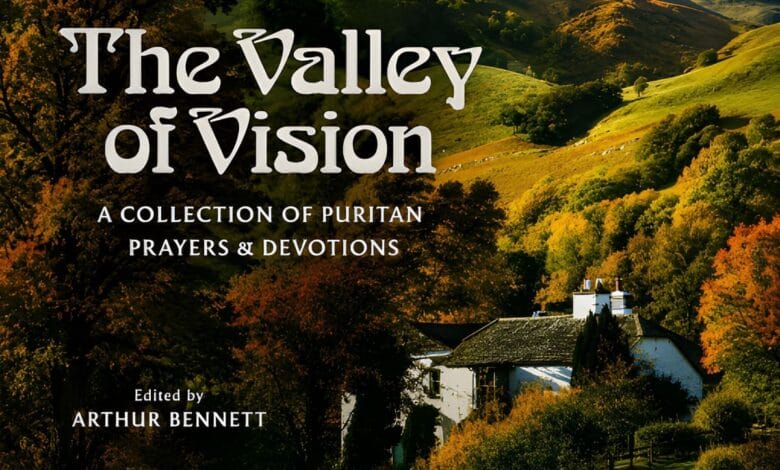
I understand why The Valley of Vision book has meant so much to many Christians, but I also understand why some people may not connect with it right away.
It is not a casual devotional. It is not the kind of book that gives you a short story, a quick lesson, and one simple sentence to carry into your day. It is slower than that. Heavier than that. And in many ways, deeper than that.
The Valley of Vision, compiled by Arthur Bennett, is a collection of Puritan prayers and devotions. It was first published by Banner of Truth in 1975, and over time it has become one of those Christian books that people keep returning to, not because it is trendy, but because it helps them pray.
That is the main thing to know before reading it. This is a prayer book. It is not mainly written to entertain you, motivate you, or give you a quick emotional lift. It is written to help you come before God with honesty, reverence, repentance, worship, and hope in Christ.
For that reason, many readers think of it as the valley of vision prayer book. It is a book you read slowly. It is a book you may pray through one page at a time. Sometimes, even one paragraph is enough.
What stood out to me while reading reviews and discussions is how often people describe the book as useful. Not just beautiful. Not just poetic. Useful. Pastors mention it as a help for public prayer and private devotion. Bloggers talk about reading it day after day. Ordinary readers say it gives words to feelings they did not know how to express.
That is one of the great strengths of The Valley of Vision. It gives language to the inner life of a Christian. When your heart feels dry, it helps you pray. When you feel convicted but do not know how to confess clearly, it gives you words. When your prayers feel rushed or repetitive, it slows you down and brings your attention back to God.
Many modern Christian books try to meet us at the level of our felt needs. They talk about anxiety, purpose, identity, habits, relationships, calling, healing, confidence, and personal growth. Those subjects can be helpful, and there is a place for books like that. But The Valley of Vision starts somewhere else.
It starts with God.
That may sound obvious, but it is not always how devotional books feel. This book keeps bringing the reader back to God’s holiness, mercy, greatness, patience, grace, and glory. It does not begin by asking, “How can I feel better today?” It begins by teaching the soul to look upward.
That is why the book can feel both comforting and uncomfortable. It comforts because it is full of grace. But it also confronts because it refuses to let us pretend. The prayers speak honestly about sin, pride, coldness, weakness, wandering thoughts, self-love, and spiritual laziness.
That part may surprise some readers. If you are used to prayers that mostly ask God to bless your plans, protect your family, and help your day go well, The Valley of Vision may feel almost too serious at first. It goes below the surface. It asks God to deal with the heart, not just the schedule.
But the book is not serious in a hopeless way. That is very important. The prayers do not expose sin just to leave the reader feeling guilty. They bring sin into the light because Christ is merciful, sufficient, and near.
Again and again, the prayers return to Jesus. They return to the cross. They return to mercy. They return to the truth that the believer’s hope is not in personal strength, religious performance, or emotional consistency, but in the finished work of Christ.
That is where the beauty of the book comes from. It does not tell you that you are strong enough. It tells you that Christ is enough. It does not tell you to hide your weakness. It teaches you to bring your weakness honestly before God.
This is one reason pastors and theologically serious readers often love the book. It is rich in doctrine, but not in a cold or academic way. It turns theology into prayer. The Trinity is not only explained; He is worshiped. Grace is not only defined; it is pleaded for and praised. Sin is not only described; it is confessed before God.
That is a rare gift. Many Christians know more theology than they pray. Others pray often, but their prayers stay very general. The Valley of Vision helps bring those two things together. It shows that deep truth should not make prayer dry. It should make prayer deeper.
The prayers are also very honest about the struggle of the Christian life. They do not present believers as people who have everything together. They sound like prayers from people who know what it is to be weak, tempted, distracted, proud, needy, and yet held by grace.
That honesty is part of why the book has lasted. It does not feel fake. It does not sound like a polished spiritual performance. It feels like prayer from the secret place, where a person stops trying to impress anyone and simply stands before God.
In that sense, The Valley of Vision book can be refreshing for our time. So much of life now is public. Even spiritual things can become public. We share quotes, post reflections, and sometimes learn to sound more spiritual than we actually are. This book pulls in the opposite direction. It brings the reader back to private honesty with God.
Still, I would not say this is a perfect book for every reader at every stage.
The first challenge is the language. The wording is older, more formal, and sometimes poetic. It is not impossible to understand, but it does require attention. Some lines need to be read slowly. Some sentences may feel unfamiliar to modern ears.
For some readers, that will be part of the beauty. For others, it may be a barrier. If someone is looking for a very simple devotional with modern language and direct application, this may not be the easiest place to start.
But I do think the older style has value. It slows you down. It makes you pay attention. It keeps the book from feeling disposable. In a world where we skim so much and forget so quickly, there is something good about a book that asks us to read with care.
The second challenge is the tone. Some readers may feel that the prayers focus too much on sin, unworthiness, and weakness. That is a fair thing to notice. The book is deeply shaped by a tradition that took sin seriously, and that can feel heavy if you are not used to it.
But I do not think the book is trying to make Christians live under a cloud of guilt. At its best, it teaches a kind of humility that leads to grace. It reminds us that we are more sinful than we like to admit, but also more loved in Christ than we can fully understand.
That balance matters. Unhealthy guilt keeps you staring at yourself. Christian repentance brings you back to God. The Valley of Vision is strongest when it does the second thing: it helps the reader confess honestly and then rest more fully in Christ.
The third criticism has to do with the way the book was compiled. Many people call these “Puritan prayers,” and in a broad sense that is true. The book comes from the Puritan tradition and draws from writers connected to that tradition. But it is not arranged like an academic sourcebook where every prayer is clearly tied to one original author.
That means readers should be careful when quoting it. It is better to say, “This prayer appears in The Valley of Vision,” rather than confidently claiming that one specific Puritan wrote a certain line, unless you have checked the original source. Some of the prayers were edited, adapted, arranged, or shaped for devotional use.
For some people, that may be disappointing. I understand that. If you are looking for a historical reference work, you may wish the book included clearer attribution. One reviewer even said his only real criticism was that he wished Arthur Bennett had identified the author of each prayer.
But as a devotional book, I do not think that weakness ruins it. It simply helps to know what kind of book this is. It is not mainly a scholarly tool. It is a devotional collection meant to help Christians pray with more depth, seriousness, and gospel hope.
Another concern is that written prayers can be misused. A person can read beautiful words without meaning them. A prayer book can become something we admire more than something we actually pray. It can become a script we hide behind instead of a guide that opens the heart.
But that problem is not unique to written prayers. We can misuse hymns. We can misuse Scripture reading. We can misuse spontaneous prayer too, repeating the same phrases without thought or affection. The real issue is not whether the words are written or unwritten. The issue is whether the heart is actually turned toward God.
That is why I think the best way to use the valley of vision prayer book is slowly and personally. Do not just read a prayer and move on. Pause over it. Take one sentence and make it your own. If a line convicts you, stop and confess. If a line comforts you, stop and give thanks. If a line feels too strong for you to pray honestly, ask God to make it true in you.
Used that way, the book becomes more than old language on a page. It becomes a teacher. It trains your prayers. It helps you adore God more carefully, confess sin more honestly, and depend on Christ more deeply.
One of the things I appreciate most about The Valley of Vision is that it does not treat prayer as a performance. It does not try to sound impressive in a modern way. It is not written to be marketable or trendy. It feels like a book from another world, but in a good way.
It reminds us that prayer is not mainly about sounding spiritual. Prayer is about coming to God. Sometimes that means worship. Sometimes that means confession. Sometimes that means asking for help. Sometimes that means sitting quietly under the weight of truth until your heart catches up with your words.
That is one reason this book can be especially helpful when your own prayers feel thin. Every Christian knows that experience. You sit down to pray and your mind wanders. You say the same things again. You know God is worthy of more than a rushed sentence, but you do not know how to begin.
The Valley of Vision can help at that point. Not because the words are magic, but because they remind you what prayer can sound like when the heart is full of Scripture, humility, and dependence on grace.
At the same time, I would not recommend reading huge sections of the book at once. It is too rich for that. If you read too much too quickly, the prayers may begin to blur together. The better approach is to read a little, pray a little, and let the words do their work slowly.
In that sense, this is not a book to finish as much as a book to return to. You may read the same prayer in different seasons and hear it differently. A line that did not stand out before may suddenly feel exactly right during a season of weakness, conviction, sorrow, or renewed hunger for God.
That is the mark of a lasting devotional book. It does not depend on novelty. It does not need to surprise you with a new idea on every page. It keeps bringing you back to the old truths Christians always need: God is holy, sin is real, Christ is sufficient, grace is undeserved, and prayer is a gift.
So, is The Valley of Vision book worth reading? I think yes, especially for Christians who want their prayer life to become more thoughtful, humble, and Christ-centered. It may not be the easiest devotional book, but it is one of the more rewarding ones if you are willing to slow down.
I would especially recommend it to believers who feel their prayers have become repetitive. I would recommend it to Christians who want to grow in confession and worship. I would recommend it to pastors or ministry leaders who want language that can shape public prayer. I would recommend it to anyone who wants a devotional companion with more weight than a quick inspirational thought.
I would be more careful recommending it to someone who is brand new to Christianity and easily discouraged by older language. That does not mean a new believer cannot benefit from it. Many could. But it may be best read with patience, explanation, and freedom to move slowly.
For me, the best way to describe the book is this: The Valley of Vision is a serious, beautiful, sometimes challenging, deeply Christ-centered prayer companion. It is not light reading, but it is nourishing reading. It is not always easy, but it is often exactly the kind of book the soul needs.
Summary of The Valley of Vision
The Valley of Vision is a collection of Christian prayers and devotions compiled by Arthur Bennett. The prayers come from the Puritan tradition and are shaped by themes like worship, repentance, grace, dependence, holiness, service, and hope in Christ.
The book is arranged by theme rather than by date. It includes prayers about the Father, Son, and Holy Spirit, redemption, confession, spiritual need, approaching God, gifts of grace, ministry, daily devotion, and the believer’s final hope.
In simple terms, this book teaches Christians how to pray with depth.
It teaches us to begin with God instead of rushing into ourselves. It teaches us to adore Him, confess honestly, ask humbly, and rest in the mercy of Christ.
One of the main themes is humility. The prayers do not encourage the reader to come to God with pride or self-confidence. They teach us to come empty-handed, aware that even our best works are imperfect and our hearts need grace every day.
Another major theme is repentance. The prayers take sin seriously, not only outward sins, but inward sins too: pride, coldness, unbelief, selfishness, distraction, and lack of love for God.
That can feel heavy.
But in this book, repentance is not despair. It is a road back to joy. Sin is brought into the light because Christ is merciful enough to deal with it.
The book also has a strong focus on the gospel. Again and again, the prayers return to Jesus Christ: His obedience, His cross, His mercy, His intercession, His grace, and His power to keep weak believers.
That is the center of the book.
Not self-improvement.
Not religious pride.
Not trying harder in our own strength.
Christ.
This is why many pastors and serious Christian readers appreciate The Valley of Vision. It teaches doctrine through prayer. The Trinity becomes prayer. Grace becomes prayer. The cross becomes prayer. Confession becomes prayer. Dependence becomes prayer.
Many Christians know more theology than they pray. Others pray often, but without much theological depth. This book brings the two together and shows that deep truth should make us more prayerful, not less.
The book also speaks to many seasons of the Christian life. There are prayers for worship, guilt, weakness, service, ministry, longing, daily need, spiritual dryness, and renewed hope. Some prayers make you feel small. Others make you feel comforted. Many do both at the same time.
That balance is part of the beauty of the book. It can wound pride without crushing the soul. It can expose sin without hiding grace. It can make you feel poor in spirit and rich in Christ at the same time.
My overall review is simple: The Valley of Vision is one of the most useful prayer books a Christian can own, as long as it is used wisely.
It is not magic. It will not automatically fix your prayer life. It should not replace Scripture. It should not replace your own honest words to God. And it should not be treated like a perfect historical source where every line can easily be traced to one exact author.
But as a companion to Scripture, it is rich.
As a guide for prayer, it is wise.
As a reminder of how deep, reverent, honest, and Christ-centered prayer can be, it is beautiful.
The best way to read it is slowly. Read one prayer. Maybe even one paragraph. Then stop and ask, “Can I pray this honestly?”
If yes, pray it. If not, ask God to make it true in you. If a line convicts you, stay there. If a line comforts you, stay there too. Do not rush past what God may be using to slow you down.
That is how this book works best. Not as a trophy on the shelf. Not as a book to quote so people think we are deep. Not as a replacement for your own heart before God.
But as a quiet tool for meeting with Him.
In the end, the reason The Valley of Vision has lasted is not because it is trendy. It has lasted because Christians still need help praying. We still need help confessing. We still need help seeing the glory of Christ from the low places of life.
That is the heart of the book.
It teaches us that the valley is not the end.
Sometimes, by grace, the valley becomes the place of vision.