
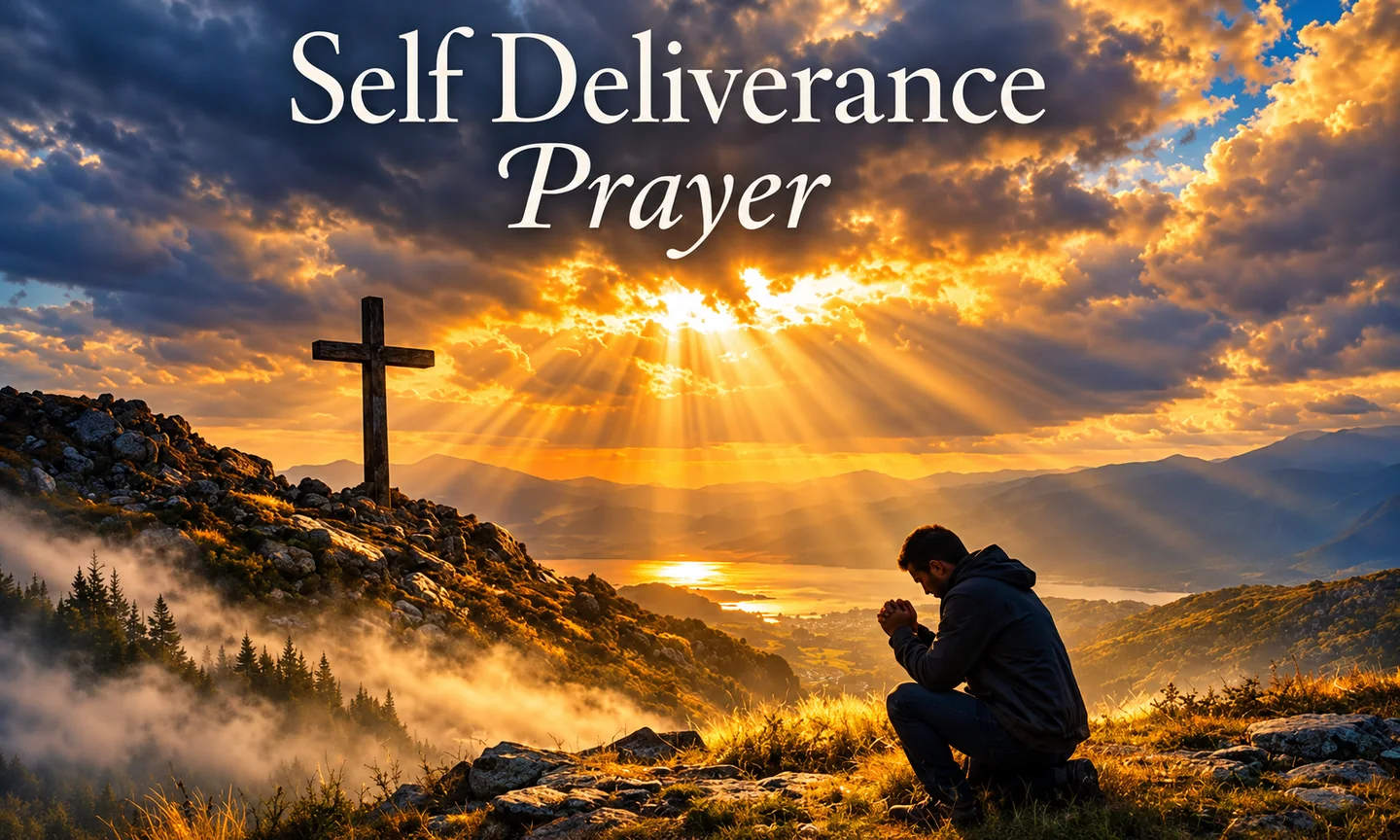
Self-deliverance prayer is not about saving yourself through your own strength. It is the personal act of bringing spiritual struggles, habits, fears and areas of weakness before God through Scripture, repentance, prayer and responsible action.
These self-deliverance prayer points with Scriptures are arranged as a seven-day devotional guide. Each day includes Bible passages, a prayer, focused prayer points, a reflection and one practical step you can take.
You can follow the guide over seven consecutive days or move through it at a pace that allows you to pray honestly and reflect carefully. The aim is not to complete a religious formula, but to draw closer to God and respond wisely to what He brings to your attention.
Important: Prayer can provide spiritual strength, hope and comfort, but it is not a substitute for medical care, mental-health support, addiction treatment, legal assistance or emergency services. Seek qualified help whenever your circumstances require it.
How to Use These Self-Deliverance Prayer Points
- Read each Scripture in context: Open the surrounding chapter rather than relying only on a single verse. You can use the Jesusfully online Bible.
- Begin with worship: Spend a few quiet moments thanking God before presenting your requests.
- Pray honestly: Speak plainly about the fears, habits, relationships or decisions troubling you.
- Do not rush: You do not have to repeat every prayer point. Focus on the ones that genuinely relate to your situation.
- Write down what you notice: A simple prayer journal can help you record insights, decisions and areas requiring further support.
- Take responsible action: Prayer should be accompanied by repentance, healthy boundaries, wise choices and appropriate help.
For help recording your reflections, read our guide on how to start a prayer journal.
Day 1: Prayer for Courage When Facing Fear and Anxiety
Fear can warn us about genuine danger, but it can also begin to control our thoughts and decisions. The first day of this guide focuses on bringing fear before God while asking for wisdom, courage and a sound mind.
Scriptures to Read
- 2 Timothy 1:7: God gives power, love and a sound mind rather than a life ruled by fear.
- Isaiah 41:10: God promises His presence, strength and help.
- Philippians 4:6–7: Believers are invited to bring their concerns to God with prayer and thanksgiving.
Prayer
Heavenly Father, I bring You the fears and worries that have been troubling me. Some of them are connected to real problems, while others have grown larger in my thoughts. Give me the wisdom to recognise the difference.
Help me not to make decisions from panic. Remind me that I am not facing today alone. Fill my heart with Your peace and give me courage to take the next responsible step. Guide my thoughts, strengthen my faith and lead me towards the support I need. In Jesus’ name, Amen.
Prayer Points
- Lord, thank You for remaining with me when I feel afraid.
- Help me identify the fears that have been controlling my decisions.
- Give me a sound mind and the wisdom to respond rather than panic.
- Replace confusion with clarity and courage.
- Show me the practical steps I need to take today.
- Give me humility to ask trustworthy people for support.
- Help me rest in Your presence while I work through what concerns me.
Reflection and Practical Step
Write down one fear that has been influencing your choices. Beside it, write one wise and realistic action you can take. This might involve making a phone call, asking for advice, creating a plan or speaking with a qualified professional.
If anxiety is persistent, overwhelming or interfering with daily life, consider speaking with a qualified mental-health professional. Asking for help is not a failure of faith.
Day 2: Prayer for Strength During Recovery From Addiction
Addiction and compulsive habits can affect the body, mind, relationships and spiritual life. They should not be dismissed as simply a lack of prayer or faith.
Prayer can be an important part of recovery, but lasting change may also require professional treatment, accountability, supportive relationships and changes to your environment.
Scriptures to Read
- 1 Corinthians 10:13: God provides help and a way to respond when temptation comes.
- Galatians 5:1: Believers are called to stand firmly in the freedom found in Christ.
- James 5:16: Honest confession and prayer with trustworthy believers can support healing and restoration.
Prayer
Lord Jesus, You know the habits and desires that have gained too much control over my life. I confess that I need Your mercy, strength and wisdom. Help me face this struggle honestly rather than hiding it in shame.
Give me courage to seek appropriate treatment and accountability. Show me the situations, relationships and triggers that make relapse more likely. Help me build healthier routines and remain patient with the recovery process. When I stumble, teach me to return to You, learn from what happened and continue moving forward. Amen.
Prayer Points
- Father, help me acknowledge this struggle without excuses or shame.
- Give me strength when temptation feels overwhelming.
- Show me the people and places that can support healthy recovery.
- Give me courage to speak with a qualified professional or recovery service.
- Help me recognise and reduce the triggers that lead me back to harmful behaviour.
- Teach me to replace destructive routines with healthier ones.
- Give me perseverance to continue even when progress feels slow.
Reflection and Practical Step
Identify one person you can speak to honestly about your recovery. This may be a qualified addiction professional, doctor, counsellor, recovery group leader, pastor or trustworthy family member.
Write down one practical change you can make today to reduce access to the substance, activity or situation connected to the addiction.
Day 3: Prayer for God’s Comfort After Painful Experiences
Painful experiences can leave lasting emotional wounds. Prayer offers a place to bring grief, anger, confusion and sorrow before God, but you do not have to revisit deeply distressing experiences alone.
Scriptures to Read
- Psalm 147:3: God cares for the brokenhearted and their wounds.
- Psalm 34:18: The Lord is near to those whose hearts are broken.
- Isaiah 43:2: God promises His presence while His people pass through difficult circumstances.
Prayer
Compassionate Father, You know what happened to me and how it continues to affect my thoughts, relationships and sense of safety. I bring You the parts of my story that I can speak about and the parts I do not yet know how to express.
Meet me with patience and compassion. Help me understand that healing does not have to be rushed. Lead me towards safe people and appropriate support. Give me wisdom about forgiveness, boundaries and the steps needed to protect my wellbeing. Remind me that what happened does not have to define my entire future. In Jesus’ name, Amen.
Prayer Points
- Lord, meet me with compassion in the places where I still hurt.
- Help me recognise that my pain is real without allowing it to define my identity.
- Guide me towards safe, trustworthy and qualified support.
- Give me wisdom to establish healthy boundaries.
- Protect me from shame and self-blame.
- Help me move towards forgiveness without ignoring justice or safety.
- Restore hope as I take one day at a time.
Reflection and Practical Step
Reflect only on what feels emotionally safe. You do not need to write a detailed account of a traumatic experience. Instead, write down what support would help you feel safer today.
Forgiveness does not mean denying harm, removing appropriate boundaries or returning to an unsafe relationship. Seek professional support when painful experiences continue to cause serious distress.
Day 4: Prayer for Renewing Your Mind With Scripture
Our thoughts influence how we interpret ourselves, other people and the situations around us. Renewing the mind involves learning to recognise thoughts that are untrue, destructive or inconsistent with God’s character.
Scriptures to Read
- Romans 12:2: Transformation involves the renewing of the mind.
- Philippians 4:8: Believers are encouraged to dwell on what is true, honourable, just and pure.
- 2 Corinthians 10:5: Thoughts should be examined and brought into obedience to Christ.
Prayer
Heavenly Father, help me recognise the thoughts and beliefs that have been shaping my life. Where my thinking is distorted by fear, shame, bitterness or hopelessness, lead me back to truth.
Teach me to pause before accepting every thought as fact. Help me fill my mind with Scripture while also listening to wise counsel. Give me discernment, emotional steadiness and the willingness to change unhealthy patterns of thinking. Amen.
Prayer Points
- Lord, help me recognise thoughts that are untrue or destructive.
- Remind me that a difficult thought is not automatically a fact.
- Teach me to measure my beliefs against Scripture and truth.
- Help me reject shame without avoiding personal responsibility.
- Give me wisdom about the information and influences I allow into my mind.
- Help me speak to myself with truth, patience and humility.
- Guide me towards appropriate support when my thoughts become overwhelming.
Reflection and Practical Step
Write down one recurring thought that troubles you. Then ask:
- Is this thought completely true?
- What evidence supports or challenges it?
- What Scripture or wise perspective offers a healthier response?
Day 5: Prayer for Releasing Anger and Unforgiveness
Anger can reveal that something painful, unjust or threatening has happened. The goal is not to pretend the anger does not exist, but to respond to it without allowing bitterness or revenge to control your life.
Scriptures to Read
- Ephesians 4:31–32: Believers are called to put away bitterness and grow in kindness and forgiveness.
- Colossians 3:13: Christians are encouraged to forgive as they have received forgiveness.
- Romans 12:18: We should pursue peace as far as it depends on us.
Prayer
Lord Jesus, You know the anger, disappointment and hurt I carry. Help me understand what lies beneath these emotions and respond in a way that honours You.
Keep bitterness from taking root in me. Give me grace to move towards forgiveness while maintaining wise and necessary boundaries. Where reconciliation is possible and safe, guide the process. Where distance remains necessary, help me release revenge and entrust justice to You. Amen.
Prayer Points
- Father, help me acknowledge my anger honestly.
- Show me the hurt, fear or injustice beneath it.
- Protect my words and actions when emotions are strong.
- Keep bitterness and the desire for revenge from controlling me.
- Give me grace to forgive without denying what happened.
- Give me wisdom to maintain appropriate boundaries.
- Guide me towards reconciliation only where it is truthful, willing and safe.
Reflection and Practical Step
Write down one situation that still produces strong anger. Ask yourself whether you need to communicate respectfully, set a boundary, seek mediation, report wrongdoing or simply stop rehearsing revenge.
Forgiveness does not require remaining in an abusive or dangerous situation.
Day 6: Prayer Against Harmful Generational Patterns
Some Christians use the phrase generational curses to describe destructive spiritual or behavioural patterns that appear repeatedly within a family. Families can pass down beliefs, habits, conflict patterns, addictions, attitudes and unresolved pain.
Prayer is one part of breaking such patterns. Change may also involve repentance, honest conversations, counselling, new boundaries and intentionally learning healthier ways to live.
Scriptures to Read
- Galatians 3:13: Christ’s redeeming work is central to Christian freedom.
- Ezekiel 18:20: Scripture also emphasises personal responsibility before God.
- 2 Corinthians 5:17: Life in Christ opens the way for genuine change and new patterns.
Prayer
Heavenly Father, thank You that my family history does not have to determine every part of my future. Show me the beliefs, habits and patterns that should not continue through me.
Where sin needs to be confessed, give me humility to repent. Where pain needs attention, lead me towards appropriate help. Teach me healthier ways to communicate, make decisions and treat others. Help me build a legacy marked by truth, responsibility, love and faithfulness. In Jesus’ name, Amen.
Prayer Points
- Lord, reveal harmful patterns that have been repeated in my family.
- Help me distinguish inherited habits from my own present choices.
- Give me humility to accept responsibility for what I can change.
- Help me reject destructive beliefs and behaviours.
- Teach me healthier patterns of communication, discipline and love.
- Lead me towards counselling, pastoral guidance or other support where needed.
- Help me leave a healthier spiritual and emotional legacy for others.
Reflection and Practical Step
Identify one family pattern you do not want to repeat. Be specific. Instead of writing only “anger” or “failure,” describe the behaviour clearly, such as refusing to apologise, avoiding difficult conversations or using money irresponsibly.
Then write one different response you will practise when that pattern appears again.
Day 7: Walking Forward With Faith, Wisdom and Accountability
Spiritual renewal is not maintained through one intense prayer session. It grows through a continuing relationship with God, obedience to Scripture, wise decisions and supportive community.
Scriptures to Read
- Ephesians 6:10–11: Believers are called to remain strong in the Lord and prepared for spiritual opposition.
- James 1:5: God welcomes requests for wisdom.
- Hebrews 10:24–25: Christian growth is strengthened through encouragement and community.
Prayer
Lord Jesus, thank You for meeting me throughout these seven days. Help me continue beyond this guide with steady faith rather than relying only on emotional moments.
Give me wisdom to recognise temptation, courage to ask for help and humility to remain accountable. Strengthen me to practise what I have learned. Surround me with people who encourage truth, responsibility and spiritual growth. Help me walk forward one faithful decision at a time. Amen.
Prayer Points
- Father, help me continue seeking You after this seven-day guide ends.
- Give me wisdom to recognise situations that weaken my progress.
- Help me maintain healthy boundaries and routines.
- Connect me with trustworthy people who can encourage and challenge me.
- Give me humility to receive correction and appropriate professional help.
- Strengthen me to respond wisely when old patterns return.
- Help me grow in faithfulness rather than chasing quick spiritual results.
Reflection and Practical Step
Create a simple plan for the next 30 days. It may include:
- A regular time for Scripture and prayer.
- One trustworthy accountability person.
- Professional support where necessary.
- Clear boundaries around known triggers.
- One healthy habit that supports your physical, emotional and spiritual wellbeing.
What Self-Deliverance Prayer Does and Does Not Mean
Self-deliverance prayer means personally turning to God rather than depending entirely on another person to pray for you. It can involve confession, repentance, resisting temptation, renewing the mind and asking God for strength.
It does not mean that you must face every struggle alone. Scripture repeatedly presents Christian faith as something lived within a community where believers pray for, encourage and support one another.
It is also not a guaranteed seven-day formula. Some situations change quickly, while others require a longer process involving spiritual growth, changed behaviour, accountability, professional treatment or protection from unsafe circumstances.
Self-Deliverance Prayer Questions
What are self-deliverance prayer points?
Self-deliverance prayer points are focused prayers used by a person seeking God’s help with spiritual struggles, temptation, fear, harmful habits or other areas requiring repentance and change.
Can I pray for self-deliverance on my own?
You can pray personally and bring your struggles directly before God. However, praying personally does not prevent you from also seeking help from trusted Christian leaders, mature believers, counsellors or qualified professionals.
Must I complete the prayers in exactly seven days?
No. The seven-day structure is simply a way to organise the guide. You may spend additional time on any section that requires deeper reflection or practical action.
Which Scriptures can I read for self-deliverance?
Helpful passages include 2 Timothy 1:7, Isaiah 41:10, 1 Corinthians 10:13, Romans 12:2, Galatians 3:13, 2 Corinthians 5:17, Ephesians 6:10–18 and James 1:5. Read each passage in its surrounding context.
Can prayer replace counselling or medical treatment?
No. Prayer may support spiritual and emotional wellbeing, but it should not replace appropriate medical care, addiction treatment, mental-health support, safeguarding assistance or emergency services.
Continue in Prayer and Responsible Action
These seven-day self-deliverance prayer points with Scriptures are a starting place, not a promise that every struggle will disappear within a week.
Continue seeking God while taking responsible steps towards change. That may involve repentance, healthier habits, difficult conversations, appropriate boundaries, trusted Christian community and qualified professional support.
Explore more Christian prayer resources or open the online Bible to continue reading the passages referenced in this guide.